
Views: 0 Author: Site Editor Publish Time: 2025-08-11 Origin: Site



You can keep your home cozy and save money by doing some simple heat pump maintenance steps. Clean the indoor and outdoor units. Check the air filters often. Remove any leaves or dirt around the units. This helps your system work well. Experts say regular care, like cleaning filters, taking care of coils, and checking wires, keeps your heat pump working better and longer. Most jobs are easy, safe, and only need basic tools. Remember, you should do some tasks yourself, but sometimes you need a professional for the best results.
Check and clean your heat pump's air filters every 1 to 3 months to keep air clean and save energy.
Keep the outdoor unit free of leaves, dirt, and snow to help your heat pump work well and last longer.
Inspect and clean coils yearly and look for damage to avoid costly repairs and keep your system efficient.
Make sure air flows freely by opening vents and sealing duct leaks to improve comfort and lower bills.
Schedule professional maintenance at least once a year to catch problems early and extend your heat pump's life.
You want your heat pump to work well all year. Taking care of your heat pump helps it run better. It keeps your home nice and comfortable. Good maintenance helps your heat pump use less energy. This saves you money on your bills. If you do not do maintenance, dirt and dust can build up. This makes your heat pump work harder. It can also make parts wear out faster.
Tip: Doing regular heat pump maintenance can stop sudden problems, especially when it is very hot or cold.
A well-cared-for heat pump lasts longer. You will not have to pay for big repairs. Your warranty will still work. If you hear strange sounds or feel weak air, your heat pump may need help. Higher bills can also be a sign. Regular care lets you find small problems early. This stops them from getting worse.
There are many good things about caring for your heat pump. Here are some of the main reasons:
Your system works at its best and uses up to 25% less energy.
Clean filters catch dust, pollen, and allergens, so your air is cleaner.
When your heat pump works well, it uses less electricity. This helps the environment.
You stay comfortable with steady heating and cooling.
You can find problems early, like leaks or worn parts, and avoid big repair bills.
Your heat pump stays strong and lasts longer.
| Benefit | What You Gain |
|---|---|
| Lower energy bills | Save money every month |
| Fewer repairs | Avoid big, unexpected costs |
| Cleaner air | Breathe easier and stay healthier |
| Longer system life | Delay the need for a new heat pump |
| Environmental impact | Reduce your carbon footprint |
You need to check your indoor air filters often to keep your heat pump running well. Start by turning off the power to your system. This keeps you safe and stops dust from blowing around. Next, find the filter. Most indoor air filters sit near the return air duct or inside the air handler. You may need to remove a cover or panel. Slide the filter out slowly. Look for any latches or clips that hold it in place. Check the filter for dust, dirt, or pet hair. If the filter looks gray or clogged, it needs cleaning or replacing. Always note the size and airflow direction marked on the filter frame.
Tip: Wear gloves and a mask when handling dirty indoor air filters to protect yourself from dust and allergens.
If your system uses washable indoor air filters, rinse them with water and let them dry before putting them back. For disposable filters, use a new one that matches the size and type. Insert the filter with the airflow arrow pointing toward the air handler. Make sure it fits snugly. Replace any covers or panels you removed. Turn the power back on and check for proper operation. Clean or replace indoor air filters to help your heat pump work better and improve indoor air quality.
You should check your indoor air filters every month. Replace or clean them as needed. The right schedule depends on your home and filter type. Homes with pets, allergies, or lots of dust need more frequent changes. Use this table to guide you:
| Household Environment / Filter Type | Recommended Replacement Frequency |
|---|---|
| General recommendation | Every 90 days (3 months) |
| Homes with pets | Every 60 days |
| Homes with allergies or multiple pets | Every 20 to 45 days |
| Vacation or infrequently used homes | 9 to 12 months |
| 1-inch wide filters | Every 1 to 2 months |
| Larger filters (e.g., 5-inch with MERV rating) | Every 5 to 8 months |
| HEPA filters | Longer lifespan, but still require periodic replacement |
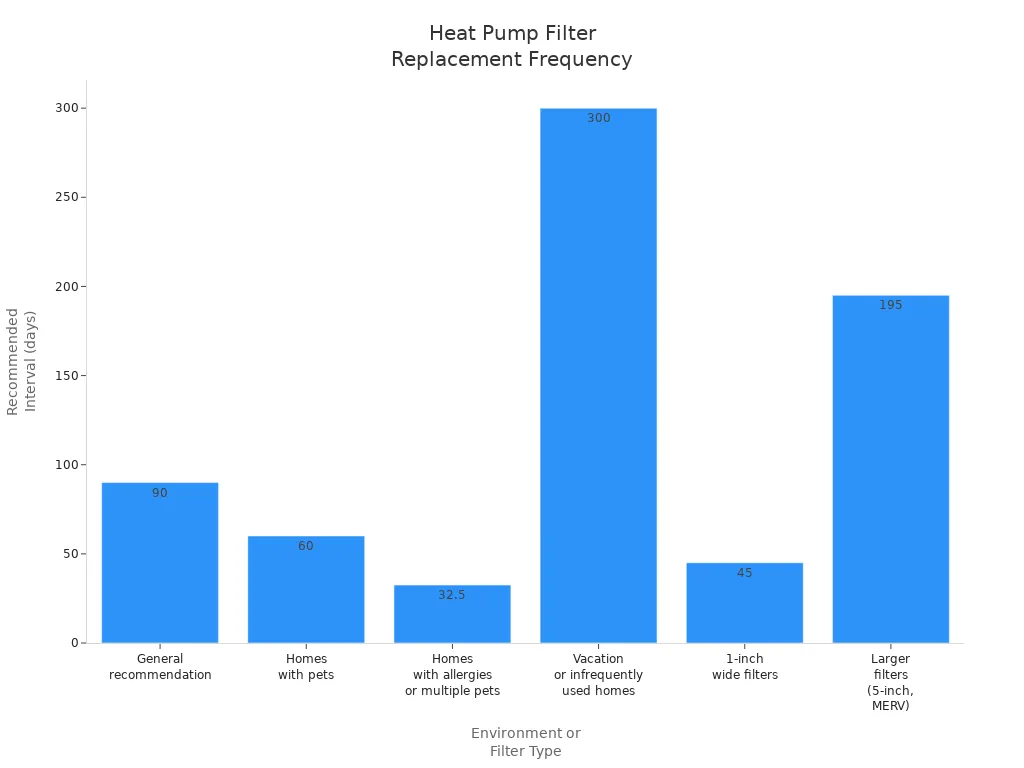
Dirty or clogged indoor air filters make your heat pump work harder. This can raise your energy bills and lower comfort. Clean filters help keep your system running smoothly and protect your indoor air quality.

You need to keep your outdoor unit free from leaves, snow, and dirt. This helps your heat pump work well and last longer. Start by turning off the power to your outdoor unit. Use a broom or a plastic shovel to gently remove snow. Avoid metal tools because they can damage the unit. Clear away leaves and twigs by hand, especially near the coils and fins. Trim any plants or bushes so they stay at least two feet away from the outdoor unit. Make sure water drains away from the base to stop ice from forming. You can use a special cover made for heat pumps in winter. These covers protect from snow and ice but let air flow through.
Tip: Check your outdoor unit after storms or heavy winds. Remove any debris right away to keep airflow strong.
The coils on your outdoor unit help move heat in and out of your home. Dirt and dust can build up on these coils and block airflow. You should check the coils often and clean them as needed. Use a garden hose to rinse off dirt, but do not use high pressure. Spray water from the top down. For stuck-on dirt, use a soft brush. Never use harsh chemicals or metal tools. Regular cleaning of the coils keeps your heat pump running at peak efficiency. Most experts suggest you have a professional clean the coils at least once a year. This helps maintain proper operation and stops problems before they start.
Clean the outdoor unit’s coils every year.
Check for dirt or leaves each month.
Trim plants and grass around the outdoor unit.
Look at your outdoor unit for signs of trouble. Bent fins, rust, or broken parts can hurt performance. If you see any leaks, especially oily spots or puddles, call a professional right away. These could mean a refrigerant leak, which needs expert repair. Rust on the frame or fan blades can also signal bigger problems. If you notice loud noises or the fan does not spin, turn off the system and get help. Regular checks help you spot small issues before they become big repairs. Keeping your outdoor unit in good shape with regular cleaning and inspections helps your heat pump last longer and work better.
You need to make sure air moves freely through your home for your heat pump to work well. Start by checking all the vents in each room. Open every vent and make sure nothing blocks them. Move furniture, curtains, or rugs away from vents. Clean dust or pet hair from vent covers with a vacuum or damp cloth.
Try this simple test: hold a thin piece of paper or use incense near a vent. If the paper does not move or the smoke does not flow, airflow may be weak. Check your air filters every month and replace them if they look dirty. Clean filters help keep air moving and support efficient operation.
Tip: Schedule annual professional maintenance to check your system, clean coils, and make sure everything works for proper operation.
Ducts carry air from your heat pump to every room. Over time, dust, dirt, or even small objects can block these ducts. Look for signs like uneven room temperatures or weak airflow from some vents. These can mean you have a duct problem.
Here are common causes of duct issues:
Blocked or dirty air filters
Duct leaks or holes
Disconnected or damaged duct sections
Inspect visible ductwork for gaps, loose joints, or torn insulation. If you see dust building up in rooms even after changing filters, your ducts may have leaks.
You can fix small duct leaks yourself if you can reach them. Use foil tape (not regular duct tape) to seal seams along straight duct runs. For joints or elbows, apply duct mastic sealant with a paintbrush. For bigger gaps, add fiberglass mesh tape before sealing with mastic. Wrap ducts with insulation and secure it with foil tape to keep air from escaping.
| DIY Duct Sealing Steps | What to Use |
|---|---|
| Seal straight seams | Foil tape |
| Seal joints/elbows | Duct mastic + paintbrush |
| Large gaps | Mesh tape + mastic |
| Insulate ducts | Fiberglass insulation |
If you notice uneven temperatures, weak airflow after cleaning, or see visible duct damage, call a professional. Strange noises or rising energy bills can also mean you need expert help. Professionals can inspect hidden ducts and fix bigger problems to keep your system running smoothly.
You can fix many heat pump problems by yourself. Try these steps before you call for help: 1. Look at the thermostat. Make sure it is set right. Change the batteries if they are old. 2. Check your circuit breakers. Reset any that are off. 3. Make sure the power switches on both units are on. 4. Open all vents and registers. Move things like furniture or curtains away. 5. Clean or change dirty air filters. Let washable filters dry before you put them back. 6. Look at the outdoor unit. Take away leaves, dirt, or snow that block air.
Tip: These easy steps can fix weak airflow, no heating or cooling, or when the system will not turn on.
Some problems need a professional to fix them. Watch for these signs: 1. The heat pump does not heat or cool enough, even after you clean filters and check settings. 2. The system will not turn on, or it keeps running and never stops. 3. You hear odd sounds like rattling, screeching, grinding, or buzzing. 4. You smell something strange, like musty, burning, or rotten odors. 5. Ice forms on the outdoor unit, or you see water leaks. 6. Your energy bills go up for no clear reason. 7. Some rooms feel too hot or cold, or the system turns on and off too much.
If you see any of these problems, turn off your heat pump and call a professional. Acting fast can stop bigger problems and keep your home safe.
Note: Waiting too long for professional help can make repairs cost more. It can also lower efficiency and make your system not last as long. You might have comfort problems or health risks, like mold or bad air.
A technician will check and tune up your heat pump once a year. Here is what they do:
| Task Category | What the Technician Does |
|---|---|
| Electrical Inspection | Check voltage, test controls, inspect wiring, and test circuit breakers |
| Refrigerant System | Measure refrigerant level, test reversing valve, check for leaks |
| Mechanical Components | Lubricate motors, inspect belts for wear and tension |
| Drainage | Clean condensate drain to prevent clogs and water damage |
| Performance Testing | Cycle system on and off, measure temperature changes, test airflow and defrost controls |
| Cleaning | Clean indoor and outdoor coils, clear debris from outdoor unit |
| Airflow and Filtration | Replace air filter, check for duct leaks, and seal them |
Most companies charge between $100 and $300 for a maintenance visit. The price depends on where you live and how big your system is. Regular visits help find small problems early and keep your heat pump working well.
| Service Type | Description | Cost Range |
|---|---|---|
| Annual Preventative Maintenance | 1-2 visits per year for tune-ups or manufacturer recommended service on HVAC system | $79 - $179 per unit |
| HVAC Service Call Rates | Technician visit to diagnose failure; cost sometimes deducted if repair is done | $59 - $229 per call |
| Hourly Rate for General Repairs | Charged for diagnostic and troubleshooting or specific repairs | $90 - $180 per hour |
Tip: Get professional maintenance at least once a year. Many experts say twice a year is best—once in spring and once in fall. This gets your system ready for both hot and cold weather.
Regular professional maintenance helps your heat pump work better, last longer, and saves you money on repairs. It also keeps your warranty good and helps your indoor air stay healthy.
You can keep your system running smoothly by following these steps for heat pump maintenance:
Change or clean air filters every 1–3 months.
Clear debris from the outdoor unit and check for damage.
Clean coils and inspect electrical connections each year.
Schedule annual professional servicing for full system checks.
Make maintenance a habit. Set phone reminders or use a checklist to stay on track. Regular care saves money, boosts comfort, and helps your heat pump last longer.
You should check your filter every month. Replace or clean it when it looks dirty. Most homes need a new filter every 1–3 months. Homes with pets or allergies may need more frequent changes.
Yes, you can handle many tasks. You can clean or replace filters, clear debris from the outdoor unit, and check vents. For electrical or refrigerant issues, call a professional.
Watch for these signs:
Strange noises
Weak airflow
Ice on the unit
Higher energy bills
Bad smells
If you notice any of these, contact a technician.
Yes! Regular care helps your heat pump use less energy. You pay less for repairs and lower your energy bills. Your system lasts longer, so you avoid early replacement costs.
You need simple tools:
Screwdriver
Soft brush
Garden hose
Vacuum
A flashlight helps you see inside vents and ducts. Gloves protect your hands from dust and dirt.


