
Views: 0 Author: Site Editor Publish Time: 2025-10-17 Origin: Site


A well-engineered Rooftop AC Unit is not just a comfort solution—it is a long-term investment in lowering operational costs and building toward a more sustainable future. For facility managers and commercial property owners, understanding how much energy rooftop systems can save is essential when planning HVAC upgrades or evaluating replacement options. Modern rooftop air conditioners now integrate intelligent control systems, advanced variable-speed compressors, and demand-based ventilation, creating a new generation of equipment that combines comfort, performance, and efficiency. These innovations don’t just cut utility bills—they also improve air quality, reduce maintenance costs, and support green building certifications. Shandong VOLKS Air Conditioning Group Co., Ltd., a trusted Chinese manufacturer of heat pump and central air-conditioning systems, delivers rooftop units that embody these advantages—combining cutting-edge engineering, durability, and exceptional efficiency for commercial facilities worldwide.
Every rooftop unit’s efficiency is shaped by a combination of technical design, installation quality, and operational control. Understanding these factors helps businesses unlock their full potential for savings.
The SEER (Seasonal Energy Efficiency Ratio) and EER (Energy Efficiency Ratio) ratings remain the most recognized measures of HVAC efficiency. They indicate how effectively the system transforms electrical energy into cooling output. However, even high-rated units may fall short of expected savings without proper calibration and control strategies.
VOLKS Rooftop AC Units are equipped with IoT-ready control platforms capable of adjusting compressor speed, fan operation, and ventilation automatically. This ensures that the system always runs at its most efficient point, whether it’s during peak summer load or mild shoulder seasons. In large facilities such as supermarkets or warehouses, where cooling loads fluctuate throughout the day, these adaptive controls can make a substantial difference in total energy consumption. Routine calibration checks further safeguard performance—ensuring thermostats, sensors, and airflow meters all operate within precise tolerances.
Air distribution is often an invisible energy drain. Ductwork leakage, poor insulation, and imbalanced airflow all contribute to higher energy bills. Studies have shown that even small leaks can waste 20% or more of conditioned air before it reaches occupied spaces.
VOLKS addresses these inefficiencies through optimized fan blade design, rugged housings, and efficient air routing within the cabinet. When combined with properly sealed duct systems, the result is stable pressure, consistent comfort, and lower overall system strain. For operators managing multiple units across a large facility, reducing air handling losses translates into significant long-term savings and extended equipment lifespan.
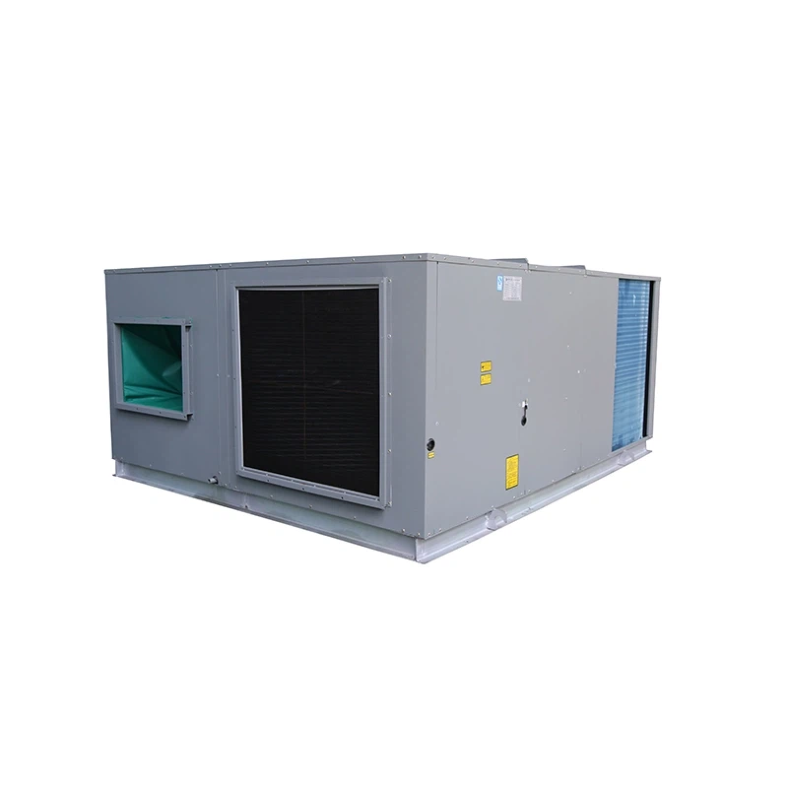
Beyond rated efficiency, real-world savings come from the integration of smart components and system-level technologies that reduce power demand while enhancing comfort.
ECM (Electronically Commutated Motor) fans represent a fundamental advancement. Unlike standard motors that run at fixed speeds, ECM fans automatically vary their speed to meet actual airflow needs, resulting in smoother operation and reduced power draw.
Variable-speed compressors are another major factor in performance. Instead of cycling on and off abruptly, they adjust output continuously, maintaining optimal temperature conditions with minimal energy waste. In VOLKS rooftop systems, scroll compressors work in harmony with electronic expansion valves to achieve precise control of refrigerant flow and temperature balance.
Economizers and energy recovery ventilators (ERVs) help reclaim energy that would otherwise be wasted. By mixing outdoor air with return air when conditions are suitable, economizers cut cooling energy use substantially. VOLKS also integrates heat exchangers that transfer thermal energy between exhaust and intake air streams—an especially effective solution in climates with large temperature swings.
Smart control technologies further enhance these mechanical improvements. Through sensors and cloud-based analytics, facility managers can monitor performance, schedule maintenance, and adjust ventilation levels based on occupancy or time of day. These features collectively enable real-time optimization, which can reduce annual HVAC energy consumption by a substantial margin.
Aging rooftop units can represent a large portion of a building’s total energy cost. However, facility operators can achieve major savings through staged retrofit programs or full replacements.
Controls upgrades provide immediate benefits with relatively low investment. Installing CO₂ sensors and implementing demand-controlled ventilation allows the system to regulate outdoor air intake according to occupancy levels. This reduces the energy spent on heating or cooling unnecessary ventilation air.
Modern control systems also enable predictive maintenance—identifying performance issues before they lead to breakdowns. By analyzing data trends, operators can detect coil fouling, low refrigerant charge, or compressor inefficiency early, avoiding costly repairs and downtime. VOLKS units are designed with compatibility for major building management systems, making retrofitting easy and cost-effective.
When replacement becomes necessary, investing in a high-efficiency RTU can yield transformative savings. VOLKS replacement packages include advanced scroll compressors, corrosion-resistant coils, and modular service panels that simplify maintenance. The higher SEER ratings achieved by these systems directly translate into lower electricity usage, while their durable coatings and optimized airflow systems ensure years of dependable service even in harsh outdoor conditions.
Additionally, replacing outdated refrigerants with low-GWP alternatives such as R32 not only improves environmental performance but also aligns with future regulations and corporate sustainability goals.
To estimate the potential energy savings from upgrading to a modern Rooftop AC Unit, building owners can follow a systematic process:
Analyze current consumption: Review historical utility data to establish baseline HVAC energy use.
Determine efficiency differences: Compare SEER or EER ratings between the current and proposed systems.
Estimate runtime: Calculate typical annual operating hours for both full and partial load conditions.
Factor in advanced features: Account for savings from variable-speed compressors, ECM motors, and smart controls.
Project total reduction: Combine all factors to estimate annual energy reduction as a percentage of total HVAC consumption.
Assess lifecycle benefits: Consider reduced maintenance costs, improved occupant comfort, and increased asset value.
For many large commercial properties, transitioning to next-generation systems like VOLKS rooftop units results in measurable year-over-year savings, improving both energy performance and corporate sustainability reporting.
Energy efficiency goes hand in hand with environmental responsibility. Lower power consumption reduces greenhouse gas emissions and helps organizations meet their ESG and green-building commitments.
VOLKS prioritizes sustainability through the use of advanced, low-GWP refrigerants such as R32. Compared to older R410A, R32 offers better thermodynamic efficiency and a significantly smaller carbon footprint. Combined with the company’s focus on recyclable materials and robust system durability, this approach minimizes environmental impact throughout the product’s life cycle.
By integrating these eco-friendly technologies, VOLKS supports customers in achieving measurable sustainability goals while benefiting from reliable, high-performance air conditioning systems.
Upgrading to a high-efficiency Rooftop AC Unit is one of the most effective strategies to reduce operational costs, improve building performance, and strengthen environmental responsibility. With innovations such as ECM fans, variable-speed compressors, and intelligent control platforms, modern systems deliver superior comfort with minimal energy waste. Shandong VOLKS Air Conditioning Group Co., Ltd. stands at the forefront of this evolution, offering durable, high-SEER rooftop units built for demanding commercial environments. These systems not only save energy but also demonstrate a clear commitment to sustainable growth and responsible resource use. To discover how your facility can benefit from advanced energy-efficient rooftop systems, contact us today for detailed specifications or a personalized efficiency consultation.


