
Views: 0 Author: Site Editor Publish Time: 2026-05-25 Origin: Site


Transitioning a commercial facility's HVAC system represents a high-stakes capital expenditure. Shifting decarbonization mandates and volatile fossil fuel costs force building owners to rethink legacy hardware. Replacing outdated equipment demands strict financial and engineering justification today. A properly specified commercial heat pump acts as a highly efficient two-in-one heating and cooling heat pump system. It transfers ambient heat instead of generating it through combustion. This shift eliminates fossil fuel dependency while dramatically improving seasonal efficiency metrics.
This guide provides facility managers and business owners an evidence-based evaluation framework. You will learn how to select, size, and deploy an energy saving HVAC system successfully. We explore system architectures, critical load matching, and specific integration steps required to hit operational targets. By following these protocols, you safeguard your building against rising energy costs while ensuring optimal tenant comfort across all seasons.
Commercial heat pumps can output 3 to 5 times more heat energy than the electrical energy they consume, drastically lowering operational expenditures (OPEX).
Over 50% of commercial facilities utilize Rooftop Units (RTUs), but Variable Refrigerant Flow (VRF) systems offer superior efficiency for multi-zone buildings with simultaneous heating and cooling needs.
Relying on traditional "rules of thumb" for sizing often leads to excessive capital costs, equipment short-cycling, and poor dehumidification; precise engineering load calculations are mandatory.
Cold-climate performance relies heavily on advanced component selection, such as variable-speed compressors and staggered defrosting protocols.
Selecting the right equipment requires a deep understanding of your building's unique thermal dynamics. You must evaluate the facility before browsing hardware catalogs. Hardware alone cannot solve underlying envelope deficiencies.
You must map out current energy consumption and structural limitations first. Evaluating your facility involves multiple objective tests to determine true heating and cooling loads. Consider these foundational steps:
Analyze historical energy consumption: Review past utility bills to identify peak demand periods. This reveals baseline usage trends.
Evaluate the building envelope: Conduct blower door tests to measure air leakage. Poor insulation forces equipment to work harder.
Define specific zone requirements: Different areas require different climates. A server room needs constant cooling, while a lobby requires dynamic temperature adjustments.
Fixing envelope leaks often allows you to purchase a smaller, more affordable system. Do not skip this baseline audit.
Many contractors estimate capacity strictly by square footage. This outdated "rule of thumb" approach leads to critical failures in commercial environments. Modern buildings feature complex thermal dynamics. They require precise mathematics, not guesses.
Oversizing Risks: An oversized unit cools or heats a space too quickly. It shuts off before running a full cycle. This short-cycling prevents the system from removing indoor humidity. High humidity leads to mold growth, uneven temperatures, and premature compressor wear.
Undersizing Risks: An undersized unit runs constantly without reaching the target temperature. During extreme weather, it forces the system to rely on expensive, inefficient backup electrical resistance heating. This destroys your expected energy savings.
You must insist on rigorous commercial load calculations. Require your engineering team to use protocols equivalent to Manual J and Manual S standards. These formulas account for window placement, occupancy levels, lighting heat emission, and regional climate data.
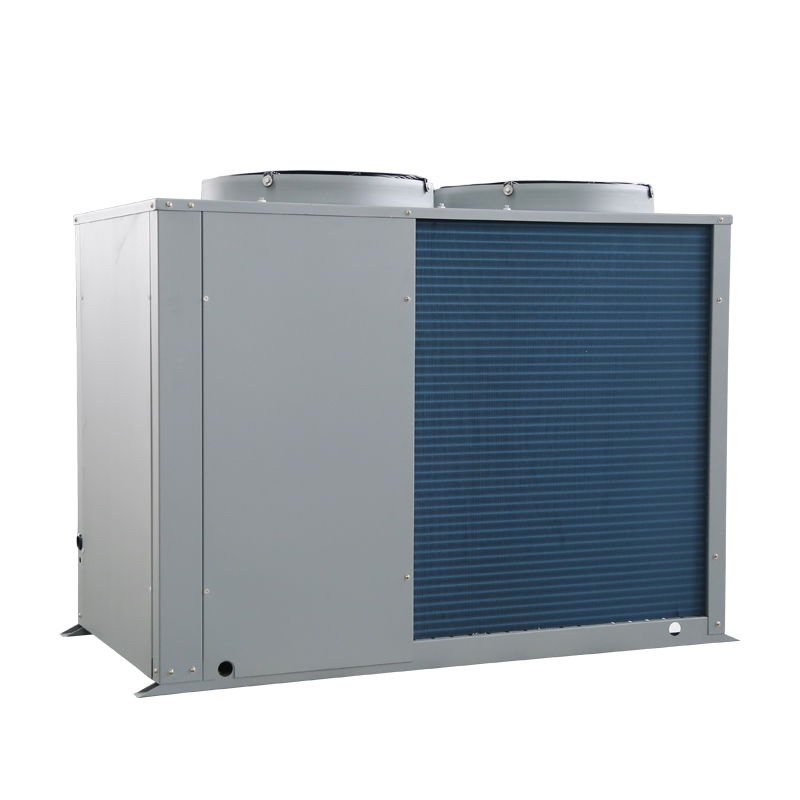
No single hardware architecture fits every commercial building. Facility layouts, existing ductwork, and initial budget dictate the best solution. Understanding the dominant market categories helps you narrow down your procurement options.
Rooftop units dominate the commercial landscape. Over half of all commercial facilities rely on them. They place all mechanical components in a single weatherized box on the roof.
They are best for retail spaces, warehouses, and low-rise commercial properties. Evaluation metrics show they are highly cost-effective for retrofitting buildings with existing ductwork. You can seamlessly replace aging gas or electric RTUs without tearing up interior ceilings.
VRF systems represent the peak of modern efficiency for complex layouts. They circulate refrigerant instead of air to different indoor units.
They are best for office buildings, schools, and complex multi-story facilities. The real advantage lies in simultaneous heating and cooling. A VRF system recovers waste heat from sunny zones operating in cooling mode. It transfers this captured heat to shaded zones requiring heating. This internal heat-sharing maximizes simultaneous energy efficiency.
When ductwork is impractical or missing, decentralized systems shine. A commercial air source heat pump installed as a mini-split offers precise localized control.
They are best for server rooms, historic building retrofits, and small-to-medium hospitality spaces. This architecture completely eliminates ductwork energy losses, which frequently exceed 20% in standard systems. They are highly scalable, allowing facility managers to deploy targeted zone control without overhauling the entire building.
PTHPs are self-contained units typically mounted directly through an exterior wall. They provide independent climate control for individual rooms.
They are best for hotels, motels, and senior living facilities. They offer quick, through-the-wall installation. You can replace legacy Packaged Terminal Air Conditioners (PTACs) easily. They do not require complex refrigerant piping or centralized mechanical rooms.
Geothermal systems leverage the stable temperatures found deep underground. They exchange heat with the earth rather than the fluctuating outside air.
They are best for large campuses and new developments with available land. They carry the highest upfront capital cost. However, they deliver extreme efficiency, offering up to 61% savings over standard air-source models. They also boast the longest operational lifespan. Internal components routinely last over 24 years, while underground loop fields can function for over 50 years.
Commercial System Architecture Comparison Chart | |||
System Type | Ideal Facility Fit | Primary Advantage | Primary Constraint |
|---|---|---|---|
HP RTU | Warehouses, Retail Malls | Utilizes existing ductwork seamlessly | Subject to roof structural weight limits |
VRF System | Multi-story Offices, Schools | Transfers heat between diverse zones | High initial installation complexity |
Mini-Split / Ductless | Historic Buildings, Server Rooms | Zero duct-loss, precise local control | Aesthetics of visible indoor units |
PTHP | Hotels, Assisted Living | Quick swap, no central piping needed | Limited capacity per unit, wall penetrations |
Geothermal | University Campuses, New Builds | Highest operational efficiency & lifespan | Requires substantial land and drilling capital |
Purchasing based on nominal laboratory ratings leads to real-world disappointment. You must evaluate equipment based on specific technical criteria relevant to your geographic location. Advanced components differentiate commercial-grade systems from basic units.
Standard commercial units rapidly lose efficiency in sub-freezing temperatures. If your facility operates in a cold climate, you must evaluate cold-climate certifications carefully. Modern variable-speed inverter compressors maintain heating capacity even when ambient temperatures plummet.
You must address the reality of freezing condensation. When systems extract heat from cold air, moisture freezes on the exterior coils. The system must enter a defrost cycle to melt this ice, temporarily pausing heat production. In large facilities, multi-unit arrays must feature sophisticated control networks. These networks stagger defrost cycles. Staggering ensures the entire building does not lose heating capacity simultaneously. Without staggered defrosting, indoor temperatures drop sharply during winter storms.
The HVAC industry is undergoing massive regulatory shifts regarding refrigerants. You must assess equipment based on federal phase-downs of high-GWP (Global Warming Potential) chemicals. Purchasing equipment tied to phased-out refrigerants guarantees high future maintenance costs.
Look for systems utilizing next-generation, low-GWP refrigerants. Consider propane-based refrigerants for specialized systems requiring high-temperature water output. Propane exhibits excellent thermodynamic properties in cold weather. It proves highly effective for boiler replacement projects demanding elevated output temperatures.
True energy optimization involves recycling energy you already paid for. You should evaluate advanced components like desuperheaters. A desuperheater captures waste heat generated during the cooling cycle. It redirects this rejected thermal energy to pre-heat domestic hot water. This process produces water heating efficiencies two to three times higher than standard electric water heaters.
Niche integration maximizes these savings. Facilities like large hotels or fitness centers generate massive amounts of waste heat. They can integrate a swimming pool heat pump to repurpose rejected building heat. Sending this free thermal energy into the pool maintains water temperatures perfectly. This strategy compounds energy savings across multiple facility operations.
Upgrading commercial mechanical systems requires clear financial justification. Facilities must look beyond the initial purchase price to understand true economic impact. Analyzing long-term operational reductions makes the business case undeniable.
We must acknowledge financial realities upfront. High-performance heat pumps generally demand a higher upfront Capital Expenditure (CapEx) than conventional gas furnaces. However, they deliver significantly lower lifetime Operating Expenses (OpEx).
This saving stems from their superior Coefficient of Performance (COP). A traditional boiler maxes out near a COP of 0.95. Heat pumps routinely hit a COP of 3.0 to 4.0. They move three to four units of heat for every one unit of electricity consumed. This multiplier effect shrinks monthly utility bills dramatically.
Combustion-based heating damages itself over time through micro-explosions and thermal stress. Heat pumps avoid this entirely. They operate with fewer moving parts and completely eliminate fossil fuel combustion.
This design reduces mechanical wear and tear. It also eliminates dangerous carbon monoxide risks from your building. Removing gas lines simplifies local safety compliance and cuts down on expensive specialized boiler inspections. Long-term maintenance shifts from hazardous combustion repair to straightforward electrical and refrigerant servicing.
You do not have to shoulder the transition costs alone. Governments and utilities aggressively subsidize electrification. Factor in available commercial tax deductions. In the US, provisions like the 179D commercial buildings energy efficiency tax deduction provide massive relief.
Furthermore, seek out federal decarbonization grants and local utility rebates. Utility providers often pay large sums to businesses that shave peak demand loads. These incentives are specifically designed to offset early adoption costs. They often reduce the payback period from a decade down to three or four years.
Excellent hardware fails if installed improperly. Facility managers must mitigate integration risks before signing procurement contracts. A methodical approach to infrastructure and vendor selection guarantees a smooth transition.
Modern buildings run on central software. Ensure your chosen system communicates natively with your existing Building Management System (BMS). Look for open protocols like BACnet or Modbus.
Proprietary communication protocols trap you into single-vendor service contracts. If a manufacturer requires expensive gateway translators to speak with your BMS, reconsider the vendor. Native integration ensures you can monitor real-time energy use, adjust setpoints remotely, and track predictive maintenance alerts without friction.
You cannot electrify a large building without verifying your power supply. Upgrading to a fully electrified platform may require significant electrical panel and transformer upgrades.
Audit your electrical capacity early in the feasibility phase. Determine your maximum amp draw. Discovering you lack the necessary three-phase power after the equipment arrives leads to catastrophic project delays. Engage an electrical engineer alongside your HVAC consultant.
Treat HVAC contractors as strategic partners, not commodity installers. Use a structured matrix to evaluate their capabilities.
Vendor Evaluation Checklist | ||
Evaluation Metric | What to Ask For | Why It Matters |
|---|---|---|
Performance Transparency | Data sheets at local winter design temperatures. | Nominal 47°F ratings mask poor sub-freezing performance. |
Engineering Rigor | Proof of Manual J/S or equivalent load modeling. | Prevents dangerous oversizing and short-cycling. |
Controls Experience | Case studies showing BACnet/Modbus integration. | Ensures the system will talk to your current BMS. |
Defrost Strategy | Documentation on multi-zone staggered defrosting. | Prevents total building heat loss during extreme cold. |
Demand performance data at your specific design temperatures, not just nominal laboratory ratings. Select contractors with proven commercial load calculation expertise. They must possess direct experience in configuring complex multi-zone heat recovery protocols.
Choosing a commercial heat pump is not a 1:1 commodity swap. It represents a strategic facility upgrade. Balancing upfront costs against critical decarbonization goals requires deep planning. Moving past basic rules of thumb ensures your building performs efficiently through extreme weather. By scrutinizing climate adaptability, leveraging waste heat, and validating electrical infrastructure, you secure a highly resilient asset.
Your evaluation process should begin immediately with an ASHRAE Level 2 energy audit. Next, schedule a comprehensive building envelope assessment to identify leakage points. Finally, commission a localized feasibility study tailored to your specific climate zone. Taking these deliberate steps ensures your investment yields decades of sustainable, low-cost climate control.
A: By transferring heat rather than burning fuel, heat pumps typically deliver 300% to 500% efficiency. In stark contrast, even the absolute best condensing gas boilers max out around 95% efficiency. This physical advantage drastically reduces the total energy required to maintain building temperatures.
A: Yes, modern cold-climate heat pumps extract reliable heat even when external temperatures drop below -10°F (-23°C). They achieve this using advanced variable-speed inverter compressors, optimized low-temperature refrigerants, and intelligent software that manages defrost cycles without compromising indoor comfort.
A: A standard RTU typically uses a gas burner for heating and a traditional AC compressor for cooling. A Heat Pump RTU uses a specialized reversing valve to flip the refrigeration cycle. This provides both cooling and high-efficiency electrical heating from a single, unified footprint.


